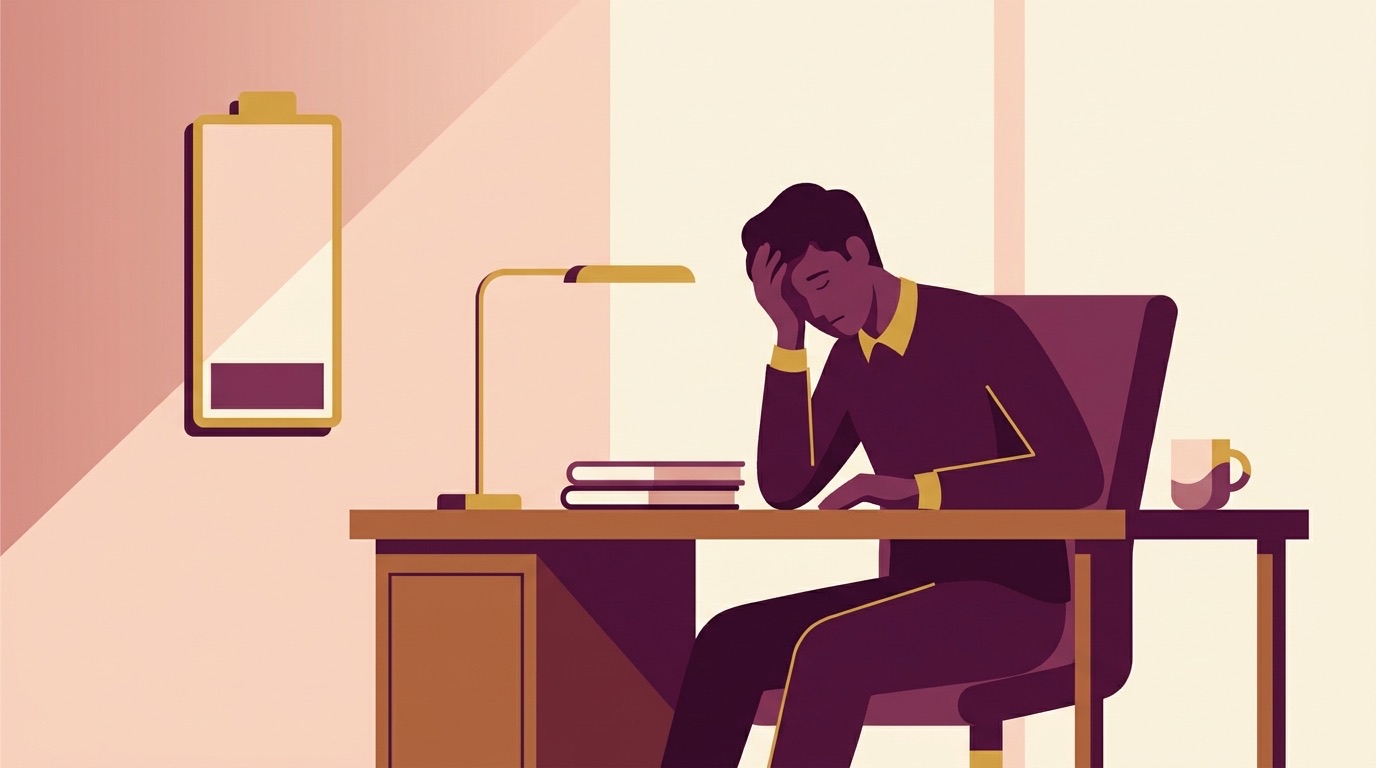
Many people only recognise burnout after months of crossing their own limits. The early signs are more subtle, and those are precisely the ones worth knowing.
What is burnout?
Burnout is a state of severe exhaustion caused by prolonged, excessive stress, most often at work, but also from caring responsibilities or personal circumstances. It is not weakness or failure, but a physical and psychological response to too much pressure for too long.
Early signs, phase 1: overload
The first phase is characterised by enthusiasm turning into overload. You work harder than is good for you, feel indispensable, skip breaks. You sleep worse but cannot truly relax. Small things irritate you more quickly than usual.
Middle phase, phase 2: numbing
In the middle phase you become emotionally numb: work feels meaningless, colleagues irritate you, you become cynical about your environment. You withdraw more and feel empty. Concentration difficulties become noticeable, along with forgetfulness.
Advanced stage, phase 3: collapse
In the advanced stage even one small extra task can feel like too much. Physical complaints such as headaches, palpitations, stomach ache or recurring colds increase. You cannot relax any more, not even at weekends. This is the point at which many people finally seek help.
Warning signs at a glance
Early warning signs: poor sleep, difficulty switching off from work, increased irritability, feeling that nothing is ever enough. Later: concentration problems, social withdrawal, cynicism, forgetfulness, physical complaints, emotional emptiness.
What can you do?
Acting early makes a significant difference. You do not have to wait until you have completely collapsed before speaking to a psychologist. At PsyIntake you can book an intake to discuss where you stand and what your options are.
Need help?
Book an intake without a waiting list
An appointment with a qualified psychologist within 24 hours, no referral letter, no waiting time.
Find a provider